Understanding Demurrage and Detention at Port Houston (And How to Avoid Costly Fees)
Demurrage and detention charges can add hundreds or even thousands of dollars to the cost of moving shipping containers. While these terms are often used interchangeably, they refer to two different types of fees that begin once a container exceeds its allotted free time. Understanding the difference is one of the best ways to reduce unnecessary transportation costs and keep your supply chain moving efficiently.
In this guide, we’ll explain what demurrage and detention are, why these charges occur, and the operational challenges that commonly lead to them at Port Houston. You’ll also learn practical strategies that can help reduce the risk of costly fees through better planning, communication, and experienced drayage coordination.
While no transportation provider can eliminate every delay, understanding how these charges work helps businesses make better planning decisions that can avoid unnecessary charges.
What Is Demurrage?
Demurrage is a fee charged by a marine terminal or ocean carrier when an import container remains at the terminal longer than its allotted free time. Once that free time expires, demurrage charges begin accumulating until the container is picked up and leaves the terminal.
Free time is established to keep containers moving efficiently through the supply chain and prevent valuable terminal space from becoming congested. When containers remain at the terminal beyond their allowed free time, demurrage charges encourage timely pickup and help offset the costs associated with storing those containers.
Because free time varies by ocean carrier, terminal, shipment type, and transportation agreement, businesses should understand the requirements that apply to each shipment. Even a short delay can result in significant costs once demurrage charges begin accumulating.

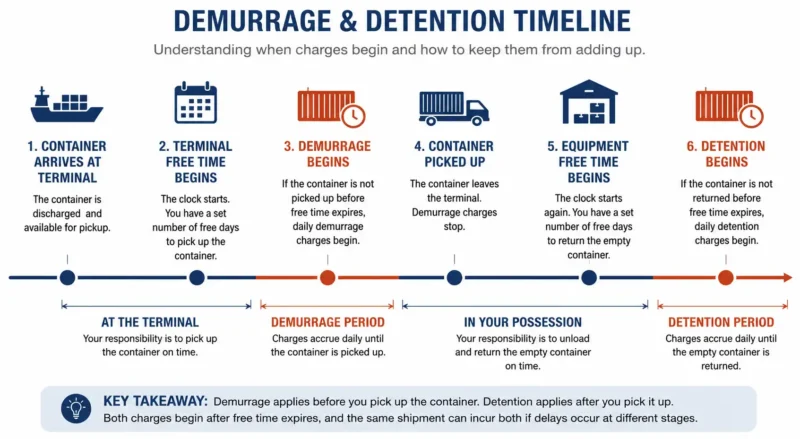
Demurrage applies before you pick up the container. Once the container leaves the terminal, demurrage charges stop. However, detention charges may begin if the empty container is not returned before its allotted equipment free time expires.
What Is Detention?
Detention is a fee charged by the ocean carrier when a container remains in the shipper’s or consignee’s possession longer than its allotted equipment free time. After a container is picked up from the marine terminal, it must be unloaded and the empty container returned to the location designated by the ocean carrier. If the container is returned after its equipment free time expires, detention charges begin accumulating.
Unlike demurrage, which applies while a container is still at the marine terminal, detention applies after the container has left the terminal. These charges help keep containers available for other shipments and encourage the timely return of ocean carrier equipment.
Because equipment free time varies by ocean carrier, shipment type, and transportation agreement, businesses should understand the return requirements that apply to each shipment. Delays in unloading or returning equipment can quickly result in additional transportation costs once detention charges begin accumulating.
Detention applies after you pick up the container. Once the container leaves the marine terminal, equipment free time begins. If the empty container is not returned before that free time expires, detention charges may apply.

Demurrage vs. Detention: What’s the Difference?
Although demurrage and detention are often confused, they apply at different stages of the container transportation process. Understanding where each charge occurs is one of the easiest ways to identify potential delays and minimize avoidable fees.
| Demurrage | Detention |
|---|---|
| Occurs: At the marine terminal | Occurs: After the container leaves the marine terminal |
| Begins: Terminal free time expires | Begins: Equipment free time expires |
| Ends: Container is picked up | Ends: Empty container is returned |
| Involves: Terminal storage | Involves: Ocean carrier equipment |
| Typically Caused By: Delayed pickup | Typically Caused By: Delayed unloading or return |
The easiest way to remember the difference is this: Demurrage applies before you pick up the container, while detention applies after you pick it up. Although they occur at different stages of the transportation process, the same shipment can incur both charges if delays occur before pickup and again before the empty container is returned.
Common Causes of Demurrage and Detention Charges
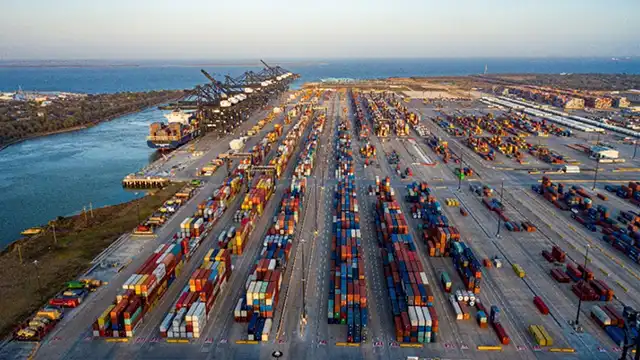
Port Houston container yard where efficient drayage helps reduce demurrage charges.
Demurrage and detention charges don’t happen randomly. They occur when a delay interrupts the normal flow of a container through the supply chain. Understanding where those delays originate helps businesses identify potential problems before free time expires. While some disruptions are unavoidable, many can be minimized through better planning, communication, and coordination among everyone involved in the shipment.
Terminal Congestion
Busy marine terminals occasionally experience heavy cargo volumes that slow gate operations, reduce appointment availability, and delay container retrieval. These delays increase container dwell time, which is the total amount of time a container remains at the marine terminal before pickup. As dwell time increases, valuable free time may be consumed before a container can even be picked up, increasing the risk of demurrage charges.
Missed Pickup Appointments
One of the most common causes of demurrage is failing to schedule transportation before terminal free time expires. Limited appointment availability, scheduling conflicts, or last-minute changes can all delay container pickup and trigger additional charges.
Customs or Documentation Delays
Customs examinations, incomplete paperwork, missing documentation, or clearance issues can prevent a container from being released on schedule. Even when these delays are outside a shipper’s control, demurrage charges may still begin once terminal free time expires.
Warehouse Scheduling Conflicts
Many warehouses and distribution centers operate on appointment schedules. If a facility cannot unload a container promptly, equipment remains in use longer than planned, increasing the risk of detention charges.
Delayed Empty Container Returns
After unloading, empty containers must be returned to the location designated by the ocean carrier. Traffic, labor shortages, scheduling issues, or operational disruptions can delay the return and extend equipment use beyond the allotted free time.
Poor Communication Between Transportation Partners
A single container move may involve ocean carriers, marine terminals, customs brokers, drayage providers, warehouses, and consignees. When information isn’t shared promptly, or responsibilities aren’t clearly coordinated, small delays can quickly become expensive demurrage or detention charges.
Five Ways to Reduce the Risk of Demurrage and Detention
✓ Schedule drayage before the container arrives.
✓ Monitor free time every day.
✓ Coordinate warehouse appointments in advance.
✓ Confirm customs documentation is complete.
✓ Maintain proactive communication with everyone involved in the shipment.
How to Avoid Demurrage and Detention Charges
Understanding demurrage and detention charges is only the first step. Reducing the risk of those charges requires proactive planning before delays occur. While no transportation provider can eliminate every unexpected disruption, businesses that plan ahead, communicate effectively, and coordinate each stage of the shipment are far less likely to incur unnecessary transportation costs.
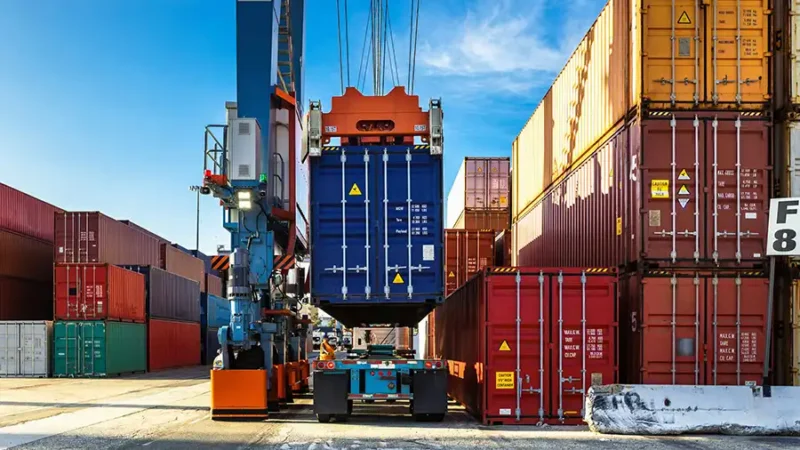
Prompt container pickup before demurrage charges begin in Port Houston.
The following best practices help importers, exporters, freight forwarders, and logistics managers keep container shipments moving efficiently while minimizing avoidable demurrage and detention charges.
✓ 1. Schedule Transportation Before the Container Arrives
Waiting until a container is available before arranging transportation can quickly reduce the amount of free time remaining. Scheduling drayage in advance helps ensure drivers, equipment, and pickup appointments are coordinated before the container is released.
✓ 2. Monitor Free Time Daily
Every container has a limited amount of free time before charges begin. Monitoring those deadlines daily allows logistics teams to respond quickly to vessel schedule changes, terminal congestion, customs delays, or unexpected operational issues.
✓ 3. Coordinate Warehouse Appointments Early
Many warehouses and distribution centers operate by appointment. Confirming receiving availability before the container is picked up helps prevent unloading delays that could extend equipment use beyond the allotted free time.
✓ 4. Verify Documentation Before Pickup
Incomplete paperwork, customs holds, or missing release information can delay container pickup even when transportation has already been scheduled. Verifying that all required documentation is complete before dispatch helps prevent avoidable delays at the terminal.
✓ 5. Maintain Proactive Communication
Ocean carriers, marine terminals, customs brokers, warehouses, and drayage providers all play an important role in moving a container efficiently. Sharing schedule changes and operational updates as early as possible gives everyone involved more time to respond, coordinate, and reduce the risk of unnecessary charges.
Why Shipping Through Port Houston Requires Extra Planning
The planning strategies discussed above apply to every container shipment, but they become even more important at Port Houston. As one of the nation’s busiest container gateways, Port Houston processes thousands of import and export containers each day. That level of activity creates additional complexity that businesses should account for when planning transportation.
Coordinating vessel arrivals, terminal appointments, customs clearance, warehouse receiving schedules, and drayage transportation requires careful timing. Limited appointment availability, changing terminal conditions, heavy traffic throughout the Houston area, weather events, and warehouse scheduling conflicts can all reduce the amount of available free time before demurrage or detention charges begin.
For companies shipping through Port Houston, successful container moves often depend on anticipating potential delays before they affect the shipment. The more efficiently transportation partners coordinate each stage of the move, the greater the opportunity to keep freight moving and minimize unnecessary transportation costs.
Who Is Responsible for Demurrage and Detention Charges?
Responsibility for demurrage and detention charges depends on the terms of the transportation agreement and the circumstances surrounding each shipment. Although the charges are often passed to the cargo owner, importer, exporter, or consignee, delays that lead to those charges can occur at many different points in the transportation process.
Ocean carriers establish equipment free time and assess detention charges, while marine terminals establish terminal free time and assess demurrage charges. Customs brokers, warehouses, drayage providers, freight forwarders, and customers all play a role in how efficiently a container moves from arrival through final delivery and equipment return.
Because multiple organizations are involved in every container move, preventing unnecessary charges is a shared responsibility. Clear communication, accurate documentation, timely scheduling, and proactive coordination among transportation partners all help reduce the risk of delays that can result in demurrage or detention charges.
How Experienced Drayage Coordination Helps Reduce Costly Fees
Reducing the risk of demurrage and detention charges requires more than simply moving containers from one location to another. It requires proactive planning, responsive communication, and the ability to adapt when schedules change. An experienced drayage provider helps coordinate each stage of the transportation process so potential delays can be identified before they become costly.
At Evans Delivery Dallas, our dispatch team works closely with ocean carriers, marine terminals, customs brokers, warehouses, freight forwarders, and customers to help keep container shipments moving efficiently. From coordinating pickup appointments and monitoring shipment status to communicating schedule changes, we focus on identifying potential issues early so customers have more opportunities to respond before free time expires. This proactive approach is part of our Proven Process, helping customers make informed transportation decisions throughout every shipment.
No transportation provider can eliminate every delay or prevent every demurrage or detention charge. However, experienced logistics coordination, timely communication, and proactive planning often help reduce unnecessary delays and support better transportation decisions when unexpected challenges arise.
Whether you’re moving import or export containers through Port Houston, Evans Delivery Dallas provides dependable container drayage services backed by experienced logistics professionals committed to helping customers keep freight moving while reducing the risk of avoidable transportation costs.
Conclusion
Demurrage and detention charges don’t have to become a routine cost of doing business. Businesses that understand free time, coordinate transportation early, and respond quickly to changing conditions are better positioned to keep freight moving, reduce avoidable charges, and improve supply chain efficiency.
If your business ships containers through Port Houston, Evans Delivery Dallas can help coordinate reliable drayage transportation backed by responsive communication and experienced logistics support. Contact us today to discuss your transportation needs or request a quote.
Learn more about our Port Houston container drayage services.→
Frequently Asked Questions
Q: What is free time for shipping containers?
A: Free time is the number of days a marine terminal or ocean carrier allows a container to remain at the terminal or in your possession before demurrage or detention charges begin. The amount of free time varies by ocean carrier, terminal, shipment type, and transportation agreement.
Q: Can the same shipment incur both demurrage and detention charges?
A: Yes. A shipment may incur demurrage charges if it remains at the marine terminal beyond its allotted free time and later incur detention charges if the empty container is not returned before equipment free time expires.
Q: Who pays demurrage and detention charges?
A: Responsibility depends on the terms of the transportation agreement. Although charges are often passed to the cargo owner, importer, exporter, or consignee, delays can occur at multiple points in the supply chain, making coordination among all transportation partners essential.
Q: How can I avoid demurrage and detention charges?
A: The best way to reduce the risk is to plan transportation before the container arrives, monitor free time closely, coordinate warehouse appointments, verify documentation, and maintain proactive communication with everyone involved in the shipment.
Q: Does Port Houston determine demurrage and detention rates?
A: No. Demurrage and detention policies are generally established by the applicable marine terminal and ocean carrier. Free time, daily charges, and billing policies vary depending on the shipment and transportation agreements.
Q: Can demurrage and detention charges be disputed?
A: Sometimes. Depending on the circumstances and the policies of the marine terminal or ocean carrier, certain charges may be reviewed or disputed. Maintaining accurate documentation and communication records is important when requesting a review.
Q: Can a drayage company eliminate demurrage and detention charges?
A: No. No transportation provider can guarantee that demurrage or detention charges will never occur. However, an experienced drayage provider can often reduce the risk by coordinating transportation, monitoring schedules, and communicating proactively throughout the shipment.